Pay in installments of $6.42 with
 ,
,
 and
and

Shipping Estimate
USA
- USA
- CAN
- USA
- CAN
Ships within 48 hours · Estimated delivery Jun 29 - Jul 4
 Promo Codes Available:
For Your Every Summer RSVP, with Code: SUMMER15
Description
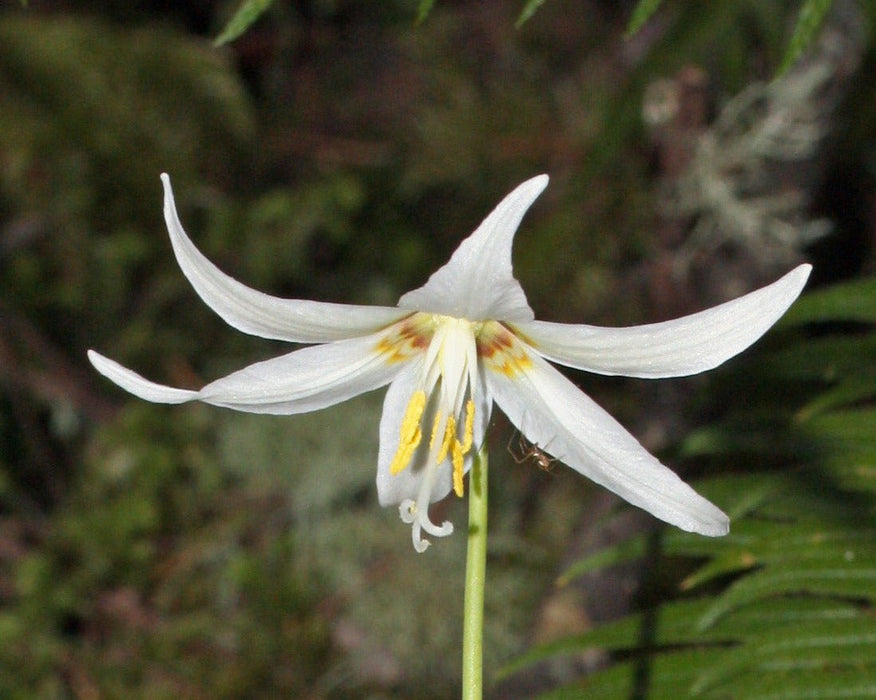
white lily hallucinogen Giant White Fawn Lily Seeds (Erythronium oregonum)This is one of the most deeply enigmatic wildflowers weve encountered, a mysterious forest dweller, blooming as a large, white, ghostly apparition for a brief window of time in the spring, then disappearing back underground to a seemingly infinitely long lived hidden bulb. Its like a dream, making you wonder if the plant was really ever there. Fawn lilies (which occur across the northern Pacific rim), are apparently edible, although we cant imagine
This is one of the most deeply enigmatic wildflowers we’ve encountered, a mysterious forest dweller, blooming as a large, white, ghostly apparition for a brief window of time in the spring, then disappearing back underground to a seemingly infinitely-long lived hidden bulb.
It’s like a dream, making you wonder if the plant was really ever there.
Fawn lilies (which occur across the northern Pacific rim), are apparently edible, although we can’t imagine eating one. The giant white fawn lily, one of our more widely distributed species produces interesting leathery, reptilian leaves that are mottled in color – mostly green and brown – a kind of dappled camouflage perhaps, like a sleeping fawn in the forest.
Occurring from British Columbia south to California, this plant typically appears on rocky ground in pristine coast range mountains, rain forests, and forest clearings. Yet, it probably once was more common elsewhere – in breezy low elevation meadows and prairies –places without summer heat – but where more exposed to human observers, it may have been harvested to exhaustion, paved over, or fed upon by beasts and boars. All of that said, it can probably grow in a Seattle or Portland backyard with some care and protection.
The precise germination and growth requirements of this plant are a mystery to us. Like other bulb producing plants we recommend trying to sow in late summer or fall, outside, in containers that are left exposed to the rain and elements in partial shade, all winter. Seedlings usually emerge very briefly in the first spring, as a tiny, single, grass-like stalk (so small you might miss it if you are not paying attention). These little green tendrils appear for mere days or weeks, before retreating underground to remain dormant for the next 11 months. The second year they repeat this, but are slightly bigger, with a few more leaflets, again for only a brief few days or weeks. The third year they do the same, but are slightly bigger still. By the 3-to-4-year time frame there is usually a small but recognizable little bulb that can be carefully and gently transplanted into a permanent location. From there, expect another several years before the first plants emerge. This is not a instant-gratification species. It is one that can be a challenge even to germinate.
Giant white fawn lily seems to prefer well-drained soil, and at maturity is a bit over 1-foot in height.
Approximately 30 seeds (0.2 grams).
Shipping Notes
- Free Standard Shipping on $100+ Orders to the USA.
- Except Preorder products are shipped in 48 hours.
- Delivery to the USA:
- Standard Shipping : 3-10 business days
- If time is of the essence, please consider selecting expedited delivery for faster service.
Exchange/Return Notes
- We offer a 30-day return/exchange service after receiving.
- Final sale items are not eligible for returns or exchanges.
- To process your return/exchange, please contact us at [email protected]
- Please click here for more details>>> Return & Exchange Policy